
English| EUR
Suggested for you
More currencies
Choose a language
The Arkansas River corridor between Cañon City and Salida holds one of Colorado's most accessible bighorn sheep populations. This guide maps the native range, explains the species' return to the canyon, and shows you where to position yourself for sightings along US Highway 50.
Quick answer
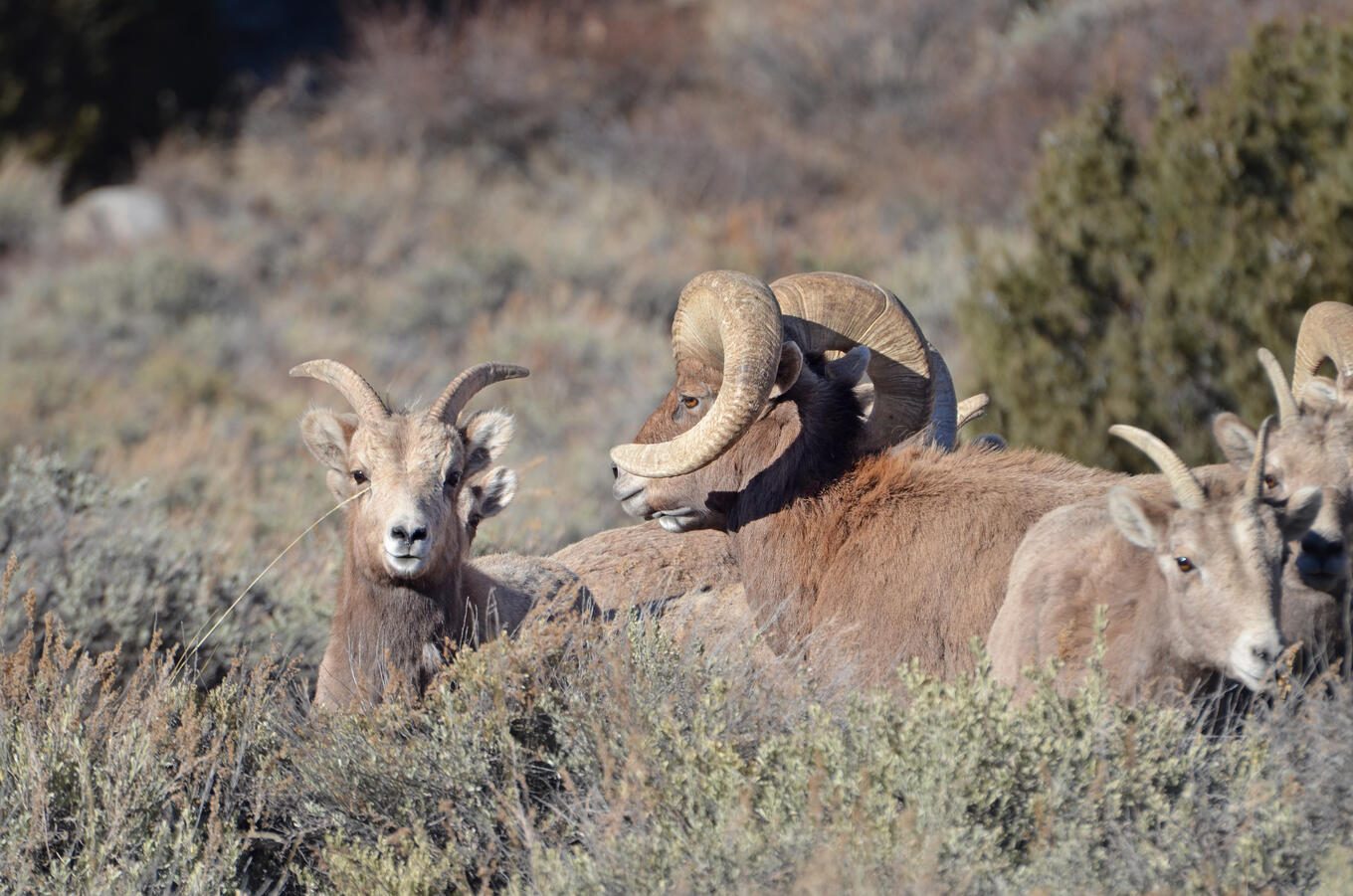
Bighorn sheep native range in the Arkansas River Canyon extends roughly 25 miles along US Highway 50, from the granite walls near Parkdale west to Coaldale. Rocky Mountain bighorn sheep—reintroduced in the 1940s after regional extirpation—now occupy steep, south-facing slopes between 6,000 and 8,500 feet, where sparse vegetation and open sightlines allow predator detection. The population is year-round resident, with rams often visible on cliffsides near river mile markers 240 through 255.
Rocky Mountain bighorn sheep vanished from the Arkansas River drainage by the early 1900s, casualties of unregulated harvest and competition with domestic livestock. Colorado Parks and Wildlife began reintroduction efforts in 1945, transplanting animals from the Tarryall Mountains into the canyon's granite amphitheaters. By the 1970s the herd had stabilized; today the Arkansas Headwaters Recreation Area supports approximately 250 individuals distributed across precipitous terrain that mirrors their ancestral strongholds. The bighorn sheep habitat within this corridor occupies a narrow ecological band. South-facing cliffs provide winter warmth and escape terrain; bunchgrass benches below 7,500 feet supply forage during spring lambing. Ewes and juveniles favor the lower talus fields near the river, while mature rams retreat to higher ridgelines outside the rut. Seasonal movements are compressed—most animals remain within a three-mile home range—but late autumn brings bachelor groups down to the highway corridor, where mineral licks and accessible grasses concentrate activity. The canyon's steep profile and minimal tree cover recreate the open montane conditions bighorns require, a geography that explains both their historic presence and their successful return. Historic range extended across Colorado's Front Range and into the Sawatch, but fragmentation reduced connectivity. The Arkansas River population remains genetically linked to herds in the Collegiate Peaks and Sangre de Cristo ranges through occasional dispersal across high saddles. Biologists monitor the group annually, noting lamb recruitment and disease exposure; pneumonia introduced by domestic sheep remains the primary threat to range-wide population stability. Viewing the herd here offers a window into active wildlife management—these are not naturally occurring residents but the result of deliberate translocation, habitat protection, and decades of careful stewardship. Public land status along the Arkansas Headwaters allows free access to bighorn sheep range throughout the year. No permits are required for observation, though Colorado Parks and Wildlife requests that visitors remain at least 50 yards from animals to avoid disturbance during lambing and rut periods. The reintroduction stands as one of the state's quiet restoration successes, a population rebuilt in plain sight of a major highway yet anchored to the wild rhythms of cliff and scree.
“Rocky Mountain bighorn sheep vanished from the Arkansas River drainage by the early 1900s, casualties of unregulated harvest and competition with domestic livestock.”
The Arkansas River canyon serves as a vital corridor for Rocky Mountain bighorn sheep, providing the rugged topography necessary for their survival. This environment offers protection from predators and access to essential mineral licks and forage.
Genetic evidence indicates bighorn sheep have occupied these mountainous regions of North America for millennia following the Pleistocene epoch.
The population inhabiting the Arkansas River canyon is classified as Ovis canadensis canadensis, a subspecies adapted to steep, rocky terrain.
Bighorn sheep require cliffs and rocky slopes with at least 60 percent slope gradient to evade predators effectively.
Following significant declines due to disease and overhunting in the 19th century, intensive management by Colorado Parks and Wildlife restored herd numbers in the canyon.
The canyon floor and south-facing slopes remain snow-free during winter, providing crucial grazing land when high-altitude forage is covered.
Sheep in this region frequently visit exposed mineral deposits to ingest essential nutrients like sodium, calcium, and phosphorus not found in standard grasses.
Wildlife biologists monitor bighorn herds to ensure limited forage is not depleted by domestic livestock or other wild ungulates.
The Arkansas River creates a natural break in the landscape that allows sheep to move between feeding grounds while staying near high-ground escape routes.
The optimal time for observing bighorn sheep within the Arkansas River canyon is during the early morning hours, specifically the best arrival window of 06:00–09:00. These dawn hours provide the most favorable lighting for visibility and align with peak wildlife activity periods.
Cold, 20°F to 45°F
The rut occurs during this period, increasing sheep movement and visibility along the slopes.
Mild, 40°F to 65°F
Lambing season begins, often drawing ewes toward lower elevations near the river.
—
Quiet conditions provide the highest probability of spotting sheep undisturbed by recreation traffic.
Verdict: For the highest probability of sightings, plan your arrival between 06:00–09:00 during the months of April or November.
The bighorn sheep native range is situated along the Arkansas River corridor. The primary access route for visitors is US Highway 50, which connects the towns of Salida and Cañon City.
US Highway 50 between Salida and Cañon City
Arkansas River guided rafting routes
Plan to arrive between 06:00–09:00 to capitalize on the best lighting and increased probability of wildlife activity. Official information is available at https://cpw.state.co.us/placestogo/parks/ArkansasHeadwatersRecreationArea.
The public lands throughout the Arkansas River bighorn sheep native range are accessible to visitors every day of the week. Access remains open around the clock to accommodate various schedules.
Bighorn sheep are sensitive to human presence and disturbance can disrupt feeding, breeding, and lamb-rearing behavior. Following wildlife observation protocols protects both the herd and visitor safety.
Everything you need to know about bighorn sheep native range
The Arkansas River canyon serves as a vital corridor for Rocky Mountain bighorn sheep, which are well-adapted to the steep, rocky terrain found throughout this river valley. This environment provides the necessary escape cover and forage that define their preferred habitat.
Yes, the population in this area is recognized as part of the broader bighorn sheep native range spanning the central Colorado mountains. Conservation efforts by Colorado Parks and Wildlife have helped maintain stable herds in these rugged landscapes.
To increase your chances of seeing these animals, plan your visit during the best arrival window of 06:00–09:00. This early timeframe offers better lighting and aligns with periods of higher wildlife activity during dawn hours.
There is no charge to access public lands within the canyon, as entry to these areas is free. You can enjoy the natural scenery and observe the bighorn sheep native range without any entrance fee.
The area remains accessible throughout the week, with operating hours from 00:00–23:59 daily. This schedule allows visitors to explore the canyon at their convenience while adhering to local regulations.
Families are welcome to observe the wildlife, provided they maintain a respectful distance and follow safety guidelines. Keeping children close and quiet is essential when exploring the bighorn sheep native range to avoid disturbing the animals.
The primary viewing area is situated along US Highway 50, between Salida and Cañon City, Colorado, USA. This highway provides several pull-offs that offer opportunities to spot wildlife along the canyon walls.